
'Once we deal with the disengagement, there is the larger issue as both of us have brought a very large number of troops up to the border.' 'So there is what we call the de-escalation issue, and then there is the larger, the next step is really, how do you deal with the rest of the relationship?'

China's Defence Ministry says the militaries of China and India are making "great progress" in implementing the disengagement agreement to end over four-year-long standoff in eastern Ladakh. Spokesman Sr Col Wu Qian said Defence Minister Rajnath Singh and his Chinese counterpart Admiral Dong Jun had a positive meeting in Vientiane, Laos, last week, and the two sides are implementing the settlement reached between the two counties. The two ministers agreed to implement the important consensus reached between the top leaders and promote stable relations between the two countries, the spokesman said.
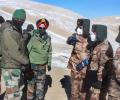
In the fresh round of talks, the Indian side is expected to press for disengagement of troops as soon as possible in all the remaining friction points besides seeking resolution of issues in Depsang Bulge and Demchok.
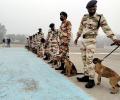
The move, which was approved by the Union home ministry, comes amid a military standoff with China in the eastern Ladakh area.
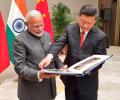
China's foreign ministry on Monday parried questions on a possible meeting between Prime Minister Narendra Modi and President Xi Jinping on the sidelines of the BRICS summit in Russia this week.

The recent reports of incursions and firing along the India-China border has not deterred spirited tourists who have begun thronging the Buddhist monastry town of Tawang in Arunachal Pradesh, over which China stakes claim.
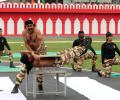
The 62nd Raising Day of the Indo-Tibetan Border Police Force was commemorated with great enthusiasm at the Seema Dwar in Dehradun.
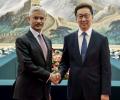
India and China should build on 'good progress' in normalising the bilateral ties to address border-related issues including de-escalation, and it is essential to avoid 'restrictive trade measures and roadblocks', External Affairs Minister S Jaishankar said on Monday during talks with his Chinese counterpart Wang Yi.

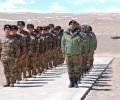
The talks till now have resulted in the resolution of issues in North and South Bank of Pangong Tso, Galwan and Gogra Hot Spring areas.

India and China on Thursday vowed to redouble efforts to resolve the remaining issues in eastern Ladakh at the earliest and 'stabilise and rebuild' ties even as External Affairs Minister S Jaishankar conveyed to his Chinese counterpart Wang Yi during a meeting that the Line of Actual Control (LAC) must be respected.
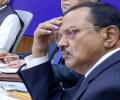
National Security Advisor Ajit Doval arrived in Beijing on Tuesday to take part in the India-China Special Representatives' talks to be held on Wednesday aimed at restoring the bilateral ties stalled for over four years' due to the military standoff in eastern Ladakh.
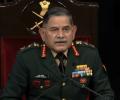
Army Chief General Upendra Dwivedi Monday said there is still a 'degree' of standoff between the Indian and Chinese militaries along the Line of Actual Control in eastern Ladakh and both sides need to sit down and firm up a broader understanding on how to calm down the situation.
India and China on Tuesday agreed to hold the next round of the Senior Commanders meeting at an early date to achieve complete disengagement from all friction points in eastern Ladakh to create conditions for the restoration of normalcy in bilateral ties.
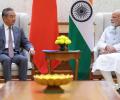
'New Delhi is not naive about its foreign policy choices.'
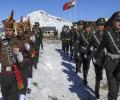
India and China on Thursday agreed to hold the next round of military talks at an early date to achieve the objective of complete disengagement in remaining friction points in eastern Ladakh.

'After more than 20 years of understanding, nothing much seems to have been achieved. What the two countries have been trying to do is to manage the recurrence of border incursions. The two sides must address the disease, and not the symptom of the disease,' says Rup Narayan Das.

Anjaw MLA and state's women and child development minister Dasanglu Pul confirmed that the duo went missing along the border with China while looking for medicinal herbs.

Jaishankar described as a "reasonable supposition" to expect some improvement in the relations between India and China following the last round of disengagement but hesitated to say that there could be a reset of the ties.

Chinese Foreign Minister Wang Yi has called on India to implement the consensus reached by Prime Ministers Narendra Modi and Xi Jinping at their summit in Russia, urging a restart of bilateral ties. Wang emphasized the importance of respecting each other's core interests, enhancing mutual trust, handling differences effectively, and bringing the relationship back on track. He suggested practical steps such as resuming flights, easing visa procedures, and planning commemorative activities for the 75th anniversary of diplomatic relations. Wang also highlighted the shared interests and opportunities for cooperation between the two countries, advocating for mutual development and strengthening coordination in international affairs.

Prime Minister Narendra Modi and Chinese President Xi Jinping will hold bilateral talks on Wednesday on the margins of the Brazil, Russia, India, China, South Africa (BRICS) summit in Russia, in their first structured meeting since the eastern Ladakh border row erupted in May 2020.
Foreign ministry spokesman Zhao Lijian, during a media briefing in Beijing, said that China's position on the border related issues is clear and consistent. "We have been following the important consensus reached by the two leaders and strictly observing the agreements between the two countries," he said, apparently referring to the directions of Chinese President Xi Jinping and Prime Minister Narendra Modi after their two informal summits, asking the militaries of the two countries to take more confidence building measures to maintain peace and tranquillity along the borders.
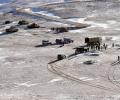
Both countries have reached a mutual agreement for disengagement of troops from the most contentious area of North and South Pangong Lake.

India and China have implemented a pact on patrolling in Depsang and Demchok along the Line of Actual Control (LAC) in eastern Ladakh, as per agreed modalities and timelines. The agreement was reached on October 21 and includes provisions for disengagement and patrolling in the last two friction points in the region. The pact has been effected and implemented as agreed, with both sides resuming patrolling activities and grazing, where applicable, as per longstanding practice before the friction began. The terms of the disengagement agreements reached prior to the latest pact continue to hold in relevant areas in eastern Ladakh. The agreement applies mutually to both sides and is without prejudice to India's positions on the LAC or boundary lines. India and China are each carrying out one round of patrolling in Depsang and Demchok, but they have maintained their deployment of troops along the LAC. The focus now is on de-escalation of the overall situation. The agreement was endorsed by Prime Minister Narendra Modi and Chinese President Xi Jinping in a meeting in Kazan, Russia, signaling attempts to normalize ties.
The MEA said the two sides agreed to continue discussions through diplomatic and military channels to resolve the remaining issues "at the earliest" so as to create conditions for the restoration of normalcy in the bilateral relations.
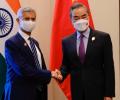
India and China are likely to hold the 16th round of high-level military talks on July 17 to resolve the issues in remaining friction points along the Line of Actual Control (LAC) in eastern Ladakh, people familiar with the development said on Wednesday.

Asked about the recent meeting between Modi and Xi, and if Russia had any role in it, Alipov said, "We have not played any role in it, but we are happy that it took place in Kazan... We wholeheartedly welcome the meeting."

A village built by China along the Line of Actual Control in the Arunachal Pradesh sector and mentioned in a recent Pentagon report, is in territory controlled by that country, sources in the security establishment in New Delhi said on Tuesday.

The Indian side is expected to seek disengagement as soon as possible in the remaining friction points besides pressing for resolution of issues in Depsang Bulge and Demchok.

'A lack of strategic trust and the 'persistent security dilemma' prevails between India and China,' points out Dr Rup Narayan Das.
The United States' Department of Defence said that it continues to closely watch developments along the Line of Actual Control at the India-China border and noted that China 'continues to amass forces and build military infrastructure along the so-called LAC'.

The move bears significance in view of the increased Chinese activities along the border and transgressions by China's People's Liberation Army (PLA).
When the internal security situation spirals out of the control of the provincial law and order machinery, the CAPFs can be called in, providing a security buffer before the Army is deployed.

'but the terrorism issue should be fair, square at the centre of the conversation. It is the major issue ... I am not saying there are no other issues. But I am not going to duck that issue for the sake of talking'

India's Foreign Secretary Vikram Misri has arrived in Beijing for a two-day visit during which he will hold talks with Chinese officials. The visit comes amid ongoing efforts to de-escalate tensions along the Line of Actual Control (LAC) in eastern Ladakh and to resume bilateral cooperation in various fields, including the Kailash Mansarovar Yatra.
The talks are following up the outcome of the 19th round of Corps Commander-level talks held between the two sides on August 13-14 at the Chushul Moldo border meeting point.
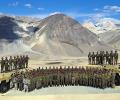
If China is accommodating regarding Depsang and Demchok, a resolution of the Sino-India territorial dispute in Eastern Ladakh could be possible.
China has chosen to keep New Delhi guessing, while retaining for itself the option of constantly changing facts on the ground and shifting the LAC westwards -- the strategy called 'salami slicing', notes Ajai Shukla.

Chinese Foreign Minister Qin Gang reiterated that the situation at the India-China border is generally stable and both sides should consolidate the present achievements and strictly abide by the relevant agreements while pushing for further cooling and easing of the conditions for sustainable peace and tranquillity at the frontier.

The former Army Chief said India's relations with China will always remain "somewhat tense".
